
Dating Apps as Tools for Social Engineering (2025)
ABSTRACT
In a bid to boost their below-replacement fertility levels, some countries, such as China, India, Iran, and Japan, have launched state-sponsored dating apps, with more potentially following. However, the use of dating apps as tools for social engineering has been largely neglected by political theorists and public policy experts. This article fills this gap. While acknowledging the risks and historical baggage of social engineering, the article provides a qualified defense of using these apps for three purposes: raising below-replacement birth rates, increasing social cohesion, and preventing certain genetic diseases.
KEYWORDS
Dating Apps, Social engineering, Romantic relationships, Fertility rates, Social cohesion, Genetic diseases, Karl Popper
Zu heiß für Demokratie? (2023)
ABSTRACT
Montesquieus politische Klimatheorie findet in der Politikwissenschaft wenig Anerkennung. Sie gilt als abwegig. Wenn sie nicht ins Lächerliche gezogen wird, dann vor allem deshalb, weil sie in einer Tradition eurozentrischer und rassistischer Stereotypisierung und Rechtfertigung kolonialer Ungerechtigkeit zu stehen scheint. Eine Neubetrachtung Montesquieus Klimatheorie ist jedoch mindestens aus drei Gründen geboten. Erstens ist die Theorie komplexer und zweitens plausibler als gemeinhin angenommen wird. Drittens wirft sie interessante Fragen über die integrationswissenschaftlichen Herausforderungen politikwissenschaftlicher Forschung sowie den Umgang mit dem anthropogenen Klimawandel auf.
KEYWORDS
Demokratie, Determinismus, Ethnozentrismus, Klima, Montesquieu, Temperatur

Instandhaltung statt Fortschritt? (2023)
ABSTRACT
Die Unionsparteien haben den Kampf um Deutungshoheit verloren: Zunehmend definiert die AfD, was es bedeutet, konservativ zu sein. Doch gegen ihre Begriffsvereinnahmung durch den Verweis auf „traditionelle Werte“, „Hierarchie“ und „deutsche Leitkultur“ formiert sich Widerstand von unerwarteter Seite: Die Grünen und selbst das Bündnis Sahra Wagenknecht liebäugeln mit einer Umdeutung des Konservativen, und zwar im Sinne einer Politik der Instandhaltung und Nachhaltigkeit. Was verrät uns dieser Kampf um die politische Sprache über den aktuellen Zeitgeist?
KEYWORDS
Argumentationsfiguren, Begriffsgeschichte, Konservatismus, Status quo
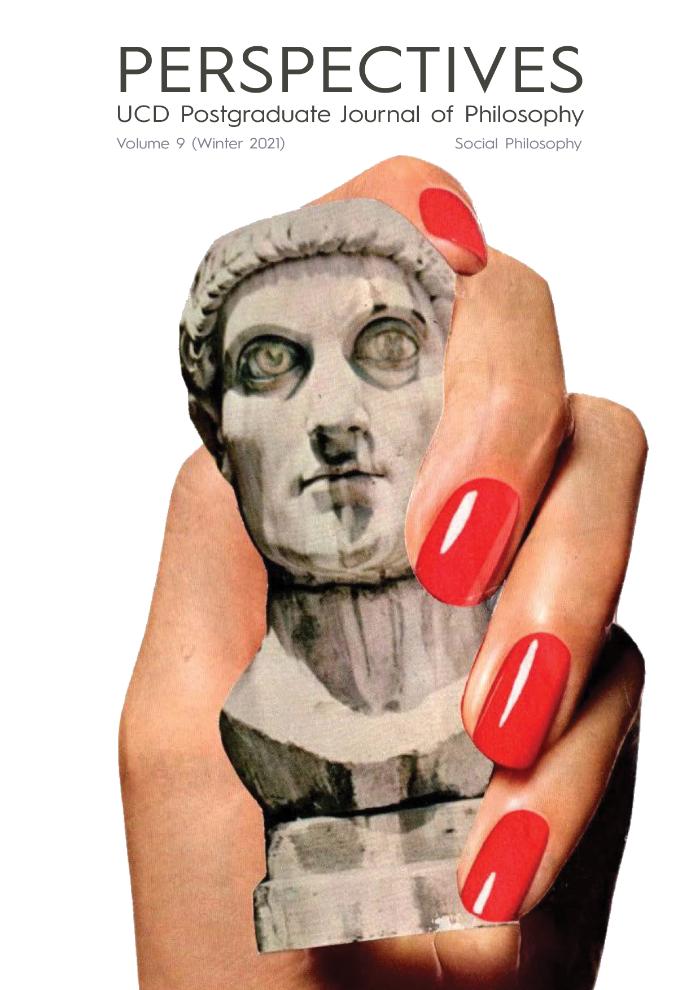
The Empty Space of Power (2021)
Beckstein, Martin and Pascal Bernhard (2021) The Empty Place of Power, Perspectives 9, 45–46.
ABSTRACT
Modern democracy is considered the supreme social good. But it is also the worst form of government, with the exception of all other forms of government. It is frustratingly vague, incomplete, impotent at times, and if potent, then also fickle. Neither (a representative of) God nor universal reason is in the driver’s seat. Power comes from the people, but belongs to no one. Modern democracy, as Claude Lefort has argued, is a regime where the place of power is empty. Yet what a marvelous social space this emptiness is! It makes room for conflict, for a – more or less civilized, sometimes seemingly productive, sometimes obviously childish – conflict as to the rules of the game indeed. It encourages reflection about meaningful social change. It gives center stage to social philosophy without, of course, ennobling those who dedicate their professional lives to it. It is this simultaneity of beauty and vapidity, of the vulgar and the sublime, that we are expressing in this painting.
KEYWORDS
Democracy, Lefort, Political Art

Kommunitarismus (2021)
ABSTRACT
Kommunitarismus bezeichnet keine vollumfängliche politische Theorie oder Ideologie, sondern eine Kritik an der kantianisch motivierten, liberalen Theoriebildung sowie der Ausprägung eines übersteigerten Individualismus in modernen Gesellschaften. Zur Selbstcharakterisierung wurde die Bezeichnung kaum genutzt. Die Kritiker verstanden sich eher als dem Republikanismus oder einem „wohlverstandenen“ Liberalismus, mit Abstrichen auch dem Konservatismus verpflichtet. Tatsächlich ist klassisch-republikanisches Gedankengut, gepaart mit soziologischen Beobachtungen, am deutlichsten als intellektuelle Inspirationsquelle auszumachen. Wie sinnhaft die Bezeichnung Kommunitarismus auch immer sein mag, sie vermittelt intuitiv ein grundlegendes Verständnis der Stoßrichtung des damit auf den Begriff gebrachten Ansinnens: dem gemeinschaftlichen Leben, dem Aktivbürgertum und Gemeinsinn, müsse theoretisch wie praktisch größerer Wert beigemessen werden.
KEYWORDS
Kommunitarismus, Liberalismus, Republikanismus

The Motivational Prerequisites of Democratic Solidarity (2020)
ABSTRACT
To assess the merits and demerits of the content of Culp’s educational programme, the paper does three things: First, it discusses whether Culp’s defence against conceivable objections manages to effectively dispel the charge of cosmopolitan arrogance. Second, it spells out one implication of epistemic modesty, which Culp considers a core competence to be imparted by citizenship education. Third, it reflects upon the tricky task of motivating individuals to comply with the demands of justice. Taken together, the paper argues that Culp’s case is impressively strong but nevertheless tends to suffer from a rationalist constriction. It does not leave sufficient room for tradition in private life and public reasoning. This rationalist constriction is problematic from a normative philosophical, and especially a practice-oriented viewpoint.
KEYWORDS
Cosmopolitanism, Democracy, Education, Epistemic Modesty, Solidarity, Tradition

Soll man PopulistInnen zu Podiumsdiskussionen einladen? (2020)
ABSTRACT
Wie soll die Zivilgesellschaft mit radikalen Akteuren wie PopulistInnen umgehen? Gilt es, den Dialog mit ihnen zu suchen oder zu vermeiden? Sollte man ihnen zuhören, sie sprechen lassen und argumentativ zu entlarven versuchen oder ihnen kein Forum bieten und so den Zugang zum gesellschaftlichen Diskurs erschweren? Der vorliegende Beitrag will diese Fragen nicht einer normativ fundierten Beantwortung zuführen, sondern analysiert und systematisiert im öffentlichen Diskurs bereits kursierende Antworten. Konkret liegt der Fokus auf Stellungnahmen, die anlässlich der Einladung der AfD-PolitikerInnen Alice Weidel und Marc Jongen an die Oxford Union (2018) bzw. an das Zürcher Theater Gessnerallee und das Hannah Arendt Center in New York (beide 2017) vorgebracht wurden. Es erweist sich, dass die Kontroversen einerseits auf demokratietheoretische Grundsatzfragen zurückfielen und andererseits den konkreten Kontextbedingungen der jeweiligen Veranstaltung zu wenig Bedeutung schenkten.
KEYWORDS
AfD, Populismus, Demokratie, Podiumsdiskussionen, Toleranzparadox
Political Conservation, or How to Prevent Institutional Decay (2019)
ABSTRACT
Sometimes established institutions aren’t perfect but cannot be replaced with better solutions. In situations of this kind, forestalling decay, not forcing progress, is the order of the day. But what needs to be done to prevent change for the worse? Must anything be done at all? To help answering these questions, the article explores conservation as a mode of political action. It argues that securing the choice to retain a comparatively favored institution becomes a practical challenge for legislators when technological, economic, ecological and other external developments threaten to turn its effective function away from which we value it. To cope with the task, legislators must resolve Edmund Burke’s ‚conservation paradox‘ in which existing arrangements can only stay the same if they are changed. The article provides a formal solution by construing political conservation as renovative reformism that adapts institutional structures, cultures or mechanisms to changing circumstances in order to prevent the accidental transformation of institutional mandates, and points out why political disputes may arise even among persons who are equally interested in leaving things as they are.
KEYWORDS
Tradition, Conservatism, Edmund Burke, Institutions, Change
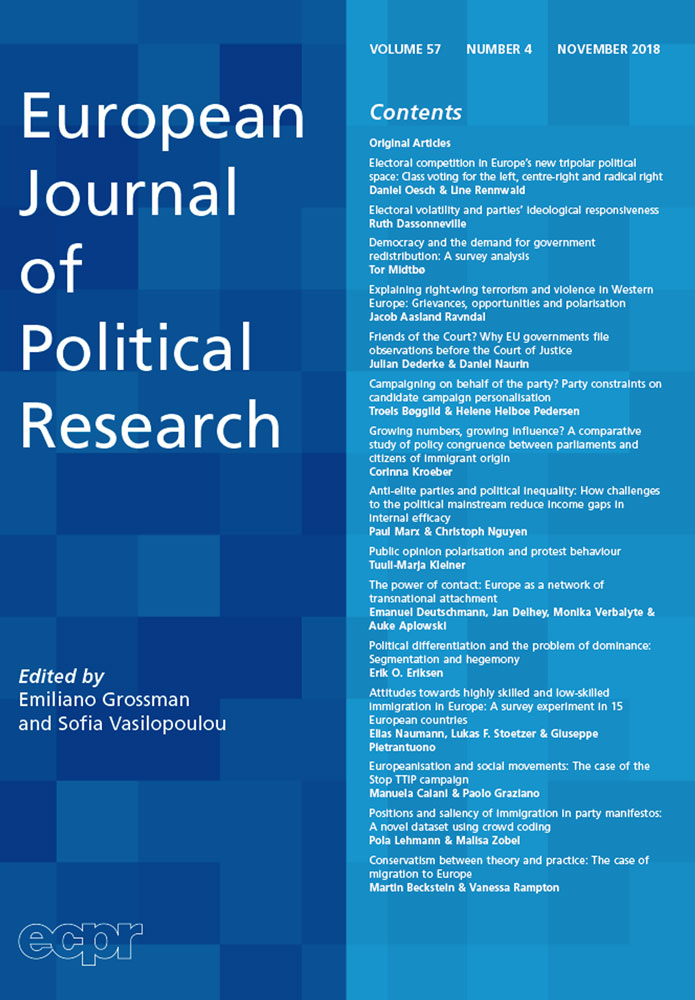
The case of migration to Europe (2018)
ABSTRACT
This article explores the neglected relationship between conservatism as political theory and conservatism as political practice using the example of recent immigration to Europe. A cursory glance at how European politicians have responded to migration challenges suggests that they roughly divide into an open-arm, leftist ‘liberal’ camp and a right-wing ‘conservative’ one. The situation, however, is more complex. This article engages with the resources of conservative theory to argue that there are many distinct conservative theoretical positions for any one policy point. Using contemporary migration patterns as a case study, the findings suggest that Conservative parties have not borrowed much from conservative theory in its variety of incarnations. In fact, conservative theory can buttress a course of action that is generous toward migrants and at odds with the claims of right-wing populist movements. While certain strands of conservatism imagine a homogenous people, there are others that are no less pro-pluralism than liberal theories, and sometimes more so.
KEYWORDS
Conservatism, Migration, Populism, Refugees
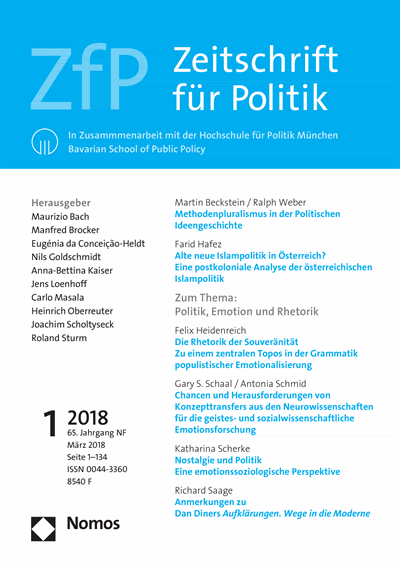
Methodenpluralismus in der Politischen Ideengeschichte (2018)
ABSTRACT
Methodenpluralismus in der Politischen Ideengeschichte Verschiedenartige Interpretationsansätze werden nicht nur von verschiedenen Vertreterinnen und Vertretern der Politischen Ideengeschichte verwendet, sondern auch in jeder einzelnen politikwissenschaftlichen Untersuchung, die Texte interpretiert. Durchaus fraglich ist, wie sich eine solche »eklektische« Forschungspraxis rechtfertigt, zumal sie zentrale Kriterien der Wissenschaftlichkeit wie insbesondere Transparenz und Konsistenz kaum zu gewährleisten vermag. Der vorliegende Aufsatz argumentiert, dass methodenplurale Forschung keine Option, sondern unhintergehbare Realität ist. Über den Rückgriff auf die philosophische Eklektik der deutschen Frühaufklärung und den amerikanischen Pragmatismus wird eine Alternative zu einer im alltagssprachlichen Sinn eklektischen Forschungspraxis aufgezeigt, welche das Problem von theoretischen Spannungen nicht überspielt und die bessere Überprüfbarkeit von Forschungsergebnissen ermöglicht.
KEYWORDS
Eklektizismus, Pragmatismus, Interpretation, Pluralismus, Methoden
Giovanni Gentiles nicht-idealtheoretische Rechtfertigung des Faschismus (2018)
ABSTRACT
In der Geschichte des italienischen Staatsdenkens nimmt Giovanni Gentile eine unrühmlicheStellung ein. Der sizilianische Philosoph stellte seine intellektuelle Schaffenskraft in den Dienst Mussolinis. Mit seinen Schriften zum Faschismus stattete er dessen Regime mit einer offiziellen Selbstbeschreibung aus und erwarb sich in der Folge den Ruf, der Philosoph des Faschismus zu sein. Allerdings kann Gentiles Philosophie nicht auf eine Apologie des Faschismus reduziert werden. Tatsächlich lag Gentiles Hauptaugenmerk, ehe er sich Anfang der 1920er Jahre Mussolinis Regime anschloss, auf der Ausprägung einer radikalkonstruktivistischen Subjektphilosophie – dem sogenannten (idealistischen) Aktualismus – deren politiktheoretischeImplikationen keineswegs offensichtlich sind. Eine differenzierte Darstellung von GentilesStaatsdenken muss diese politiktheoretischen Implikationen identifizieren und eruieren, inwiefern sie Gentile zur späteren Legitimation des Faschismus verhalfen oder zumindest motiviert haben mochten
KEYWORDS
Giovanni Gentile, Mussolini, Faschismus, Aktualismus, Ideologie

Eigentum verpflichtet (2017)
ABSTRACT
In seiner Schrift, „Gespräche aus der Gegenwart über Staat und Kirche“ (1846), leitet Joseph von Radowitz eine allgemeine Sozialbindung des Eigentums aus dem Prinzip „Adel verpflichtet“ ab. Während der Text in den vergangenen Jahren als wichtiges Dokument der intellektuellen Vorbereitung des Wohlfahrtsstaats in Deutschland entdeckt wurde, steht eine detaillierte Interpretation noch aus – und zwar nicht zuletzt deshalb, weil die Intention des Autors durch die platonische Dialogform des anonym veröffentlichten Texts, die Namensgebung der miteinander diskutierenden Charaktere und das sonderbare Vorwort offensichtlich verschleiert wird. Die vorliegende Untersuchung holt dies nach und zeigt, dass Radowitz mittels der Ausbildung sozialstaatlicher Strukturen nicht, wie bislang angenommen, einen machtpolitischen Schulterschluss zwischen Arbeiterschaft und Erbadel gegen das aufstrebende Bürgertum zu befördern, sondern eine überparteiliche Allianz zu schmieden suchte, um dem schleichenden Funktionsverlust institutioneller Errungenschaften entgegenzuwirken.
KEYWORDS
Wohlfahrtsstaat, Joseph von Radowitz, Eigentum, Leo Strauss
The Concept of a Living Tradition (2017)
ABSTRACT
Starting with Popper, social theorists across the board have acknowledged that traditions serve socially valuable functions. However, while traditions are usually understood as ‘living’ entities that come in overlapping varieties and evolve over time, the socially valuable functions attributed to tradition tend to presuppose invariability in ways of thinking and acting. Addressing this tension, this article provides a detailed analysis of the concept of tradition, and directs special attention to conceivable criteria for the authentic continuation of a tradition. It is argued that the ways of thinking and acting that constitute the material of a tradition must – among faithful members of that tradition – stand in a relation of equivalence – not identity or similarity. The implications of this account concern our ability to decide (normatively) conflicts over authenticity among rival tradition branches as well as the role that traditions play in policy-making.
KEYWORDS
Tradition, Karl R. Popper, Authenticity, Invention Tradition
Kommunitaristische Gerechtigkeit (2016)
ABSTRACT
Der Begriff ‚Kommunitarismus’ bezeichnet eine philosophische Strömung, die im letztenDrittel des 20. Jahrhunderts als Kritik an derliberalen (und libertären) Theoriebildungentstanden ist. Ziele der Kritik waren insbesondere das 1971 von John Rawls vorgelegte Werk A Theory of Justice sowie Robert Nozicks 1974 erschienenes Buch Anarchy, State and Utopia.
KEYWORDS
Kommunitarismus, Liberalismus, Gerechtigkeit

What Does It Take to Be a True Conservative? (2015)
Beckstein, Martin (2015) What Does It Take to Be a True Conservative? Global Discourse 5/1, 4–21.
ABSTRACT
Is there any reason to discriminate among the rival claims self-proclaimed conservatives make for being truly conservative? This article argues that at least some of these claims can legitimately be dismissed by an independent third. Drawing on and critically interrogating the theories of conservatism provided by Huntington, Oakeshott, as well as Brennan and Hamlin, this article argues that many characterizations of conservatism mistake contingent circumstances explaining why people historically were or conceivably might be reluctant to promote social change for a fully formed conservative ideology. Not least, risk- and uncertainty-centered accounts, which have gained in popularity as of recently, constitute no viable basis for plausible claims to being truly conservative. Rather than specifying what it takes to be a true conservative, these accounts provide a formalized description of one kind of contingent circumstances that may lead a principled non-conservative to adopt conservative political attitudes.
KEYWORDS
Authenticity, Conservatism, Ideology, Skepticism, Social Disputes
Political Consumer Activism and Democratic Legitimacy (2014)
ABSTRACT
This article discusses consumer activism not as an ethical, but as a political phenomenon. A political concept of consumer activism implies, first, that consumers sometimes express support or opposition to products and services or consumer and business practices at least partly in order to advance nonmarket agendas, and, second, that consumer activism in the economic sphere occasionally has palpable impact on the organization of social life. Early contributors to the debate were optimistic that political consumer activism might be able to extend democracy into the economic sphere. In recent years, however, scholars have increasingly voiced misgivings about this, arguing that political consumer activism may suffer from a democratic deficit: it may amount to an impermissible form of vigilantism or facilitate the illegitimate conversion of market power into political power. This article systematizes and reassesses these concerns, focusing in particular on arguments that dispute the compatibility of political consumer activism with liberal democracy as a procedural ideal. I conclude that political consumer activism does not face problems to do with legitimacy in this regard, most importantly because money does not play a more important role in market-based politics than in official democratic processes. Political consumer activism takes many forms, yet it is hardly ever about voting with the pocketbook.
KEYWORDS
Activism, Democracy, Participation, Consumption, Economy

Die Befangenheit zugunsten des Status quo in der Bioethik (2014)
ABSTRACT
Den Verheißungen der grünen Biotechnologie zum Trotz stehen viele Menschen in Deutschland der genetischen Optimierung von Nutzpflanzen kritisch gegenüber. Sind sie von einer irrationalen Befangenheit zugunsten der konventionellen Landwirtschaft ergriffen? Der vorliegende Essay sucht nach Rechtfertigungsgründen für die Neigung im öffentlichen Diskurs über grüne Biotechnologie, das Bestehende über das Neue zu bevorzugen. Dafür wird auf skeptische und analytische Theorieansätze in der konservativen politischen Philosophie zurückgegriffen.
KEYWORDS
Bioethik, Konservatismus, Status-quo
Addressing Ruben’s Internal and External Perspectives (2014)
ABSTRACT
In his reply, David-Hillel Ruben argues that “internal perspectives” on disputes over true succession (i.e. of the parties involved) might well rely on counterfactuals, but that “external perspectives” (i.e. of scholars) ought to dispense with them because they are hard to verify. I think Ruben is right in this regard. Moreover, I do not wish to object to his overall argument that social disputes over true succession are intractable because true succession is inherently vague. However, I still tend to consider Ruben’s account incomplete because the category of vagueness alone does not fully explain why disputes over true succession are essentially contestable.
KEYWORDS
Tradition, Social Disputes, Authenticity
Traditions and True Successors (2014)
ABSTRACT
Building upon previous work by John Williams, David-Hillel Ruben has launched an exciting discussion about traditions and true successors that Williams and Ruben themselves, as well as Samuel Lebens and Jonathan Payton, have taken several steps further. In particular, I consider Payton’s proposal for the concept of inheritance of a tradition through a causal-similarity chain convincing. While I also concur with Payton in regard to his proposed modifications of Ruben’s initial concept of true succession, I suggest that some further modifications be made.
KEYWORDS
Tradition, Social Disputes, Authenticity

Nation Building in Contemporary Germany (2013)
ABSTRACT
This article examines the contending redefinitions of national identity in contemporary Germany’s memorial culture, focusing particularly on the ensemble of monuments and parade fields known as the former Nazi Party rally grounds in Nuremberg. In a detailed case study, I analyse the recent conversion of one of the physical remnants of National Socialism – Albert Speer’s transformer station – into a fast-food restaurant and interpret this conversion as a novel contribution to the discourse on German nationhood. I argue that the provocative commercial reutilisation of the former Nazi monument gives expression to a renewed self-confidence that Germany has gained from displaying a willingness to face up to its past as perpetrator nation. While the intervention thus deviates from the self-indicting spirit that had been characteristic for Germany’s memorial culture after World War II, an ironic note is conspicuous in this act of commemorative politics that indicates a way of dealing with the fascist legacy that is, surprisingly in some respects, superior to more conventional memory strategies.
KEYWORDS
National Socialism, Nationalism, Germany, Politics of Memory

Machiavellis Der Fürst (2013)
ABSTRACT
Seit fünfhundert Jahren wird Machiavellis Der Fürst gelesen, kontrovers diskutiert und von politischen Theorien für sich in Anspruch genommen, und dies, obgleich die Schrift eigentlich erst 1532 veröffentlicht wurde. Wohl auch aufgrund dieses Umstands sind die Diskussionen über Der Fürst vor allem nach 1532 zum Gegenstand von Untersuchungen geworden, während die Rezeptionsgeschichte der Schrift in den zwanzig Jahren zwischen der ersten Erwähnung der Schrift (1513) und der Erstveröffentlichung (1532) weitgehend unbeleuchtet geblieben ist. Der vorliegende Artikel widmet sich diesem Forschungsdesiderat. Dafür werden die uns überlieferten Quellen – wie etwa Vorworte zu Manuskriptkopien, Briefwechsel und Anekdoten – systematisch ausgewertet und auch die kommentierenden Stellungnahmen Machiavellis, des ,ersten Lesers‘ von Der Fürst, berücksichtigt. Die Untersuchung zeigt, dass die frühsten Rezipienten den Deutungshorizont von Der Fürst maßgeblich verschoben und bis heute populäre Interpretationsmuster der Schrift entwickelten. Neben dem Aufzeigen der mit einer solchen Untersuchung einhergehenden methodischen Probleme bietet der Artikel eine funktionalistisch-rezeptionstheoretische Erklärung der koproduktiven Leistung der Leserschaft für die Bedeutungsgenese von Der Fürst an.
KEYWORDS
Machiavelli, Der Fürst, Rezeption, Interpretation

Egalitarian Political Economy Beyond Market Socialism (2013)
ABSTRACT
On reflecting about the prospects of advancing the egalitarian cause in the United States, John Roemer makes the case for more traditional strategies than the coupon socialism model he advocated in earlier work. First of all, he suggests, an ethos of solidarity must be developed and the super-rich be subjected to higher taxation. This comment assesses this proposal. On the one hand it is discussed whether the ethos of solidarity Roemer calls for in order to counteract the culture of greed among American elites requires nurturing an undesirable culture of envy among the rest of the population. On the other hand it is considered whether the neoclassical principal-agent model—that Roemer believes must be contested in order to popularize a steep progressive income tax—might be one of the more promising tools to restructure the incentives of economic elites and curb casino capitalism.
KEYWORDS
John Roemer, Egalitarianism, Market Socialism
Chantal Mouffe and the Intellectual Heritage of Carl Schmitt (2011)
ABSTRACT
In her more recent work, Chantal Mouffe enters into what she calls a ‘dialogue’ with Carl Schmitt on the political. So far, interpretations of this dialogue suggest that Mouffe attempts to revise Schmitt’s friend/enemy-distinction and carve out a theory of agonistic pluralism. An interpretation on these grounds, this article argues, reduces the dialogue to its analytical dimension and cannot comfortably be upheld. Mouffe indeed appropriates Schmitt’s friend/enemy-distinction, but she also gets inspired by the metatheoretical facet of his intellectual heritage with the result that her theory becomes organically interwoven with a polemical dimension. Rather than aiming at a post-structuralist defanging of Schmitt’s conception of the political, Mouffe recontextualizes and applies it to the current academic discourse, for this allows decontesting her radical pluralist cause by establishing a we/them opposition along a political/post-political divide.In her more recent work, Chantal Mouffe enters into what she calls a ‘dialogue’ with Carl Schmitt on the political. So far, interpretations of this dialogue suggest that Mouffe attempts to revise Schmitt’s friend/enemy-distinction and carve out a theory of agonistic pluralism. An interpretation on these grounds, this article argues, reduces the dialogue to its analytical dimension and cannot comfortably be upheld. Mouffe indeed appropriates Schmitt’s friend/enemy-distinction, but she also gets inspired by the metatheoretical facet of his intellectual heritage with the result that her theory becomes organically interwoven with a polemical dimension. Rather than aiming at a post-structuralist defanging of Schmitt’s conception of the political, Mouffe recontextualizes and applies it to the current academic discourse, for this allows decontesting her radical pluralist cause by establishing a we/them opposition along a political/post-political divide.
KEYWORDS
Carl Schmitt, Chantal Mouffe, Agonism, The Political

Giovanni Gentile und die ‘Faschistisierung’ des Aktualismus (2008)
ABSTRACT
Giovanni Gentile war Philosoph und er war Faschist. Der Philosoph des Faschismus hingegen war er nicht. Als Philosoph entwickelte Gentile zwischen 1899 und 1916 ein kompliziertes neuidealistisches Gedankengebäude, das er aufgrund seiner Betonung des sich kontinuierlich auffrischenden Denkprozesses „Aktualismus“ nannte. Am 31. Oktober 1922 wurde Gentile in Mussolinis Kabinett berufen und trat bald darauf dem Partito Nazionale Fascista bei. In den folgenden Jahren entwickelte Gentile ein faschistisches Staatskonzept, dem er selbstbewusst „totalitären Charakter“ zusprach. Aktualismus und Gentiles faschistisches Staatskonzept werden heute häufig als in einem organischen Zusammenhang stehend beschrieben – und Gentile in der Folge zum „Philosophen des Faschismus“ erklärt. Dabei kann sich eine solche Interpretation nicht nur auf Argumente von politischen und philosophischen Gegnern stützen, sondern auch auf das Urteil von Giovanni Gentile selbst. Wie im vorliegenden Artikel jedoch gezeigt wird, fördert eine systematische Werkanalyse ein anderes Bild zu Tage. Ein Vergleich von Gentiles Aktualismus mit seinen Schriften zur Verteidigung des Faschismus lässt erkennen, dass das faschistische Staatskonzept weder als stringente Weiterentwicklung des Aktualismus, noch als dessen philosophisch konsistente Anwendung auf die historische Situation gewertet werden kann. Vielmehr drängt sich der Eindruck auf, dass der Erste Weltkrieg einen gravierenden Einschnitt in Gentiles Denken hervorrief, infolgedessen er sein politisch-philosophisches Werk neu justierte.
KEYWORDS
Giovanni Gentile, Faschismus, Aktualismus
„Wir brauchen Strukturen und Verfahren einer europäischen Republik“ (2007)
ABSTRACT
In der gegenwärtigen Reflexionsphase sucht die Europäische Union nach Wegen aus der Krise. Aus diesem Anlass befragten Martin und Frank Beckstein den lange Zeit in St. Gallen tätigen Verfassungsrechtler und Rechtsphilosophen Peter Häberle zu den Themen Europäische Identität und (Staats-)Bürgerschaft sowie dem Problem der demokratischen Legitimation der EU.
KEYWORDS
Peter Häberle, EU, Demokratie, Identität
 MARTIN BECKSTEIN