Modeling Interpretation and the Practice of Political Theory (2022)
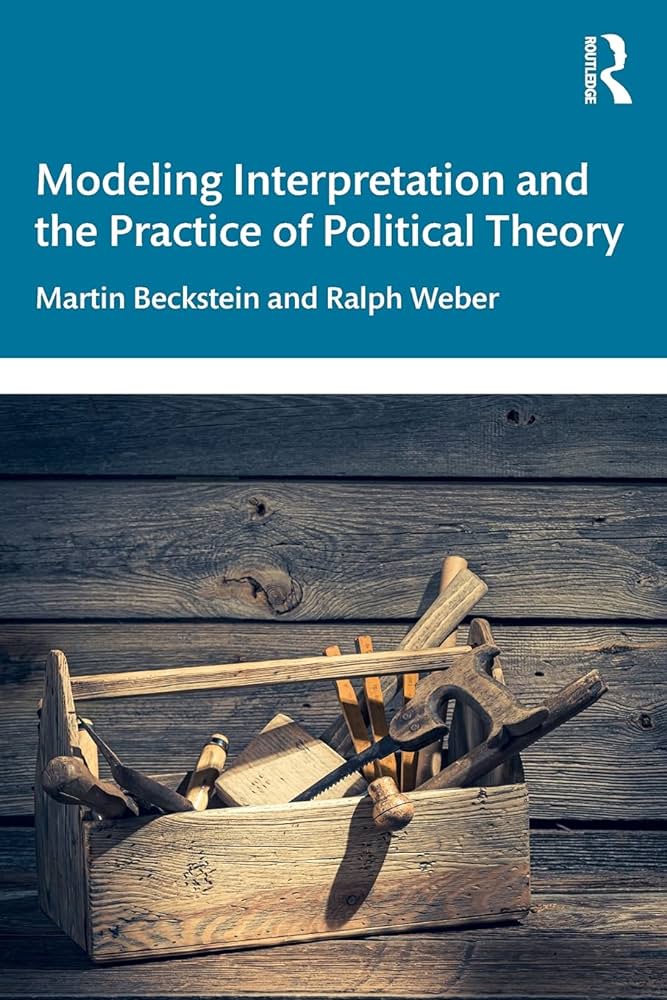
“This excellent book is impressively wide-ranging, covering eight approaches to interpreting a variety of texts – and importantly, arguing that we should combine approaches rather than using only one approach. The writing is clear and accessible, and the authors use examples very instructively.”
— Adrian Blau, King’s College London
“How are we to interpret texts of political theory? What approaches work? Can we get different or contrary perspectives to work together? This book gets to grips with these questions, and what is more does so in a highly readable way. This is an eminently clear-headed and thoughtful book, which should be read by all those interested in political theory and its interpretation. It argues for pluralism, in a theoretically considered way, that asks hard questions of opposing styles of interpretation.”
— Gary Browning, Oxford Brookes University
“With clarity, creativity, and verve, Beckstein and Weber advocate pragmatic eclecticism in the practice of political theory. Too often, a few texts and a single method of interpretation are passed unreflectively from teacher to student. Through an insightful, engaging, and often entertaining show-and-tell of methodologies, their limits and possibilities, Beckstein and Weber challenge this status quo. Their book is indispensable reading for beginning graduate students, and a valuable corrective for the rest of us.”
— Nomi Claire Lazar, University of Ottawa
“Beckstein and Weber have assembled an array of vital and interesting approaches to interpreting texts in the history of political thought. Students and practitioners alike will find this text to be a valuable resource for understanding the substance and utility of interpretive methods.”
— Sean Noah Walsh, Capital University
“This book offers balanced discussions of current models of interpretation and invigorates new directions of study. Summing Up: Recommended. Advanced undergraduates through faculty.”
— Choice
ABSTRACT
Political theory offers a great variety of interpretive traditions and models. Today, pluralism is the paradigm. But are all approaches equally useful? What are their limits and possibilities? Can we practice them in isolation, or can we combine them? Modeling Interpretation and the Practice of Political Theory addresses these questions in a refreshing and hands- on manner. It not only models in the abstract, but also tests in practice eight basic schemes of interpretation with which any ambitious reader of political texts should already be familiar. Comprehensive and engaging, the book includes:
- A straightforward typology of interpretation in political theory.
- Chapters on the analytical Oxford model, biographical and oeuvre- based interpretation, Skinner’s Cambridge School, the esoteric model, reflexive hermeneutics, reception analysis and conceptual history.
- Original readings of Federalist Paper No. 10 , Plato’s Statesman, de Gouges’s The Three Urns, Rivera’s wall painting The History of Mexico and Strauss’s Persecution and the Art of Writing; with further chapters on Machiavelli, Huang Zongxi and a Hittite loyalty oath.
- An Epilogue proposing pragmatist eclecticism as the way forward in interpretation. An inspiring, hands- on textbook suitable for undergraduate and graduate students, as well as experienced scholars of political theory, intellectual history and philosophy interested in learning more about types and models of interpretation, and the challenge of combining them in interpretive practice.
CONTENTS
Introduction: A Typology of Interpretation in Political Theory
1. From Text to Argument: An Analytical Interpretation of the Federalist Paper No. 10
2. The Person Behind the Author: What Plato’s Life Tells Us about the Statesman
3. What the Author also Authored: Understanding Olympe de Gouge’s The Three Urns through Her Oevre
4. Speaking into the Context: Specifying the Illocutionary Potential of Diego Rivera’s The History of Mexico
5. Subtexting: An Esoteric Interpretation of Leo Strauss’s Persecution and the Art of Writing
6. The Reader in Front of the Text: De-/Recontextualizing Huang Zongxi’s Mingyi daifang lu
7. Reading the Readers:How the Meaning of Machiavelli’s The Prince Changed before Its Publication
8. Tracing the Concept of Contract: Interpreting a Hittite Loyalty Oath for Conceptual History
Epilogue: Eclecticism in Political Theory
The Politics of Economic Life (2015)

“This is a highly interesting, original, and intelligently written study. Martin Beckstein has utilized some of the latest cutting-edge analyses in political and social theory to reinterpret fundamental economic practices and categories. The book ranges widely across economic practices with a critical eye and teases out intentional and hidden political significance embodied in them. By combining sophisticated theory with often entertaining examples, Beckstein contrives to make the book both challenging and very readable.”
— Michael Freeden, University of Oxford
“The economic colonization of society and politics has been one of the great themes of modern social theory. Martin Beckstein reverses this perspective, asking how far in today’s world everyday economic practices such as consumption or work may contain the potential for new forms of democratic political expression and contestation. Based on a micro-political approach emphasizing the view ‚from below‘ and on numerous examples richly illustrating his argument Beckstein makes an important contribution to a subject that has not so far received sufficient attention.”
— Roland Kley, Universität St. Gallen
ABSTRACT
In recent years, economic life has become increasingly politicized: now, every company has a ‘philosophy’, promising its customers some ethical surplus in return for buying their products; consumers shop for change; workers engage in individualized forms of employee activism such as whistleblowing; and governments contribute to the re-configuration of the economic sphere as a site of political contestation by reminding corporate and private economic actors of their duty to ‘do their bit’. The Politics of Economic Life addresses this trend by exploring the ways in which practices of consumption, work, production, and entrepreneurship are imbued with political strategy and ideology, and assesses the potentials and perils of the politicization of economic activity for democracy in the 21st century.
CONTENTS
1. The Politicization of Economic Activity
2. Towards a Micro-Political Approach to Economic Life
3. The Marketplace as a Site of Politics
4. Work and the World of Micropolitics
5. Shopping for Change?
6. Political (By-)Products of Economic Production
7. Entrepreneurial Space Production
8. Faraway, So Close
Politische Ideengeschichte: Interpretationsansätze in der Praxis (2014)
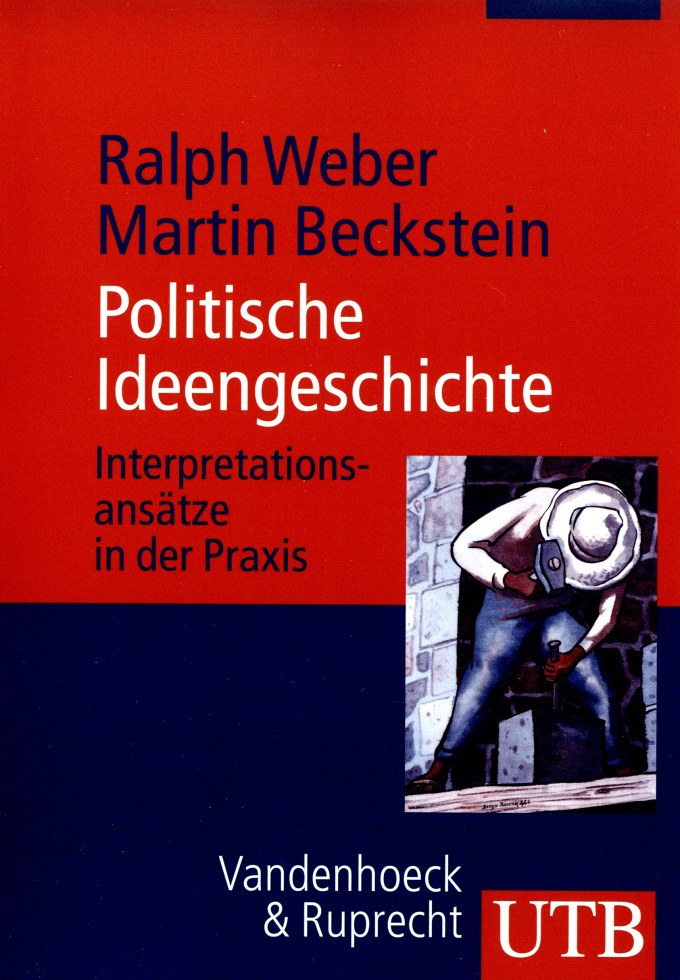
“Hervorragender Überblick, sehr verständlich geschrieben.”
— Gernot Gräßner, Europäische Fernhochschule Hamburg
“Das Buch bietet im deutschsprachigen Raum die erste systematische Einführung in Methoden politischer Ideengeschichte. Dabei besticht es durch den klaren, anwendungsorientierten Aufbau – eine solche Publikation hat fraglos gefehlt.”
— Vincent August, Humboldt-Universität zu Berlin
“Eine sehr zu empfehlende und in dieser Form bisher einzigartige Einführung speziell in Methoden der Ideengeschichte.”
— Andreas Busen, Universität Hamburg
BESCHREIBUNG
Wie interpretiert man einen Text der politischen Theorie? Ist es bedeutsam, von wem oder für wen er geschrieben wurde? Oder geht es vor allem um die innere Struktur und die Wirkung auf den Leser? Dieser Band stellt die wichtigsten Interpretationsansätze im Vergleich vor und wendet sie an zentralen Texten an. So entsteht echte Methodenkompetenz!
INHALTSVERZEICHNIS
Einleitung: Interpretationsansätze in der Politischen Ideengeschichte
Kapitel 1: Der analytische Ansatz
Kapitel 2: Der biografische Ansatz
Kapitel 3: Der werkimmanente Ansatz
Kapitel 4: Der esoterische Ansatz
Kapitel 5: Der kontextuelle Ansatz
Kapitel 6: Der hermeneutische Ansatz
Kapitel 7: Der rezeptionstheoretische Ansatz
Kapitel 8: Der begriffsgeschichtliche Ansatz
Epilog
EDITED BOOKS
Scruton’s Conservatism – An Invitation to the Great Tradition (2019)
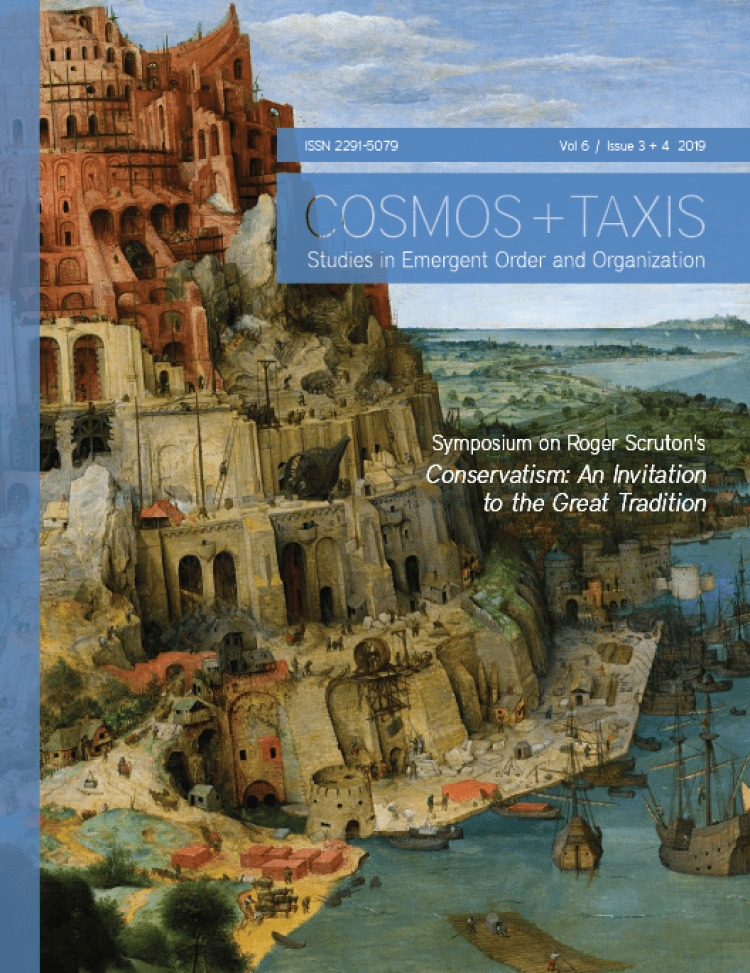
Cosmos + Taxis Vol. 6, Issue 3+4
Edited and with an introduction by Martin Beckstein.
Contributors: Kevin Mulligan, Eno Trimçev, David C. Corey, Noël O’Sullivan, Kieron O’Hara, Efraim Podoksik, Nicholas Capaldi, Ron Dart, Nathan R. Cockram, Leslie Marsh and Sir Roger Scruton.
CONTENTS
Editorial Introduction to a Symposium on Roger Scruton’s Conservatism—An Invitation to the Great Tradition
Martin Beckstein
Conservatism: Empirical or Metaphysical?
Eno Trimçev
Conservatism, Value and Social Philosophy
Kevin Mulligan
Roger Scruton on the Prehistory of Liberalism
David D. Corey
The Toryism of exile: Culture, Politics and the Quest for ‘home’ in Sir Roger Scruton’s Elegiac Conservatism
Noël O’Sullivan
Conservatism Then and Now
Kieron O’Hara
Scruton on Conservatism in Germany and France
Efraim Podoksik
Will the Real Conservatives Please Stand Up
Nicholas Capaldi
Anglo-Canadian Toryism and Anglo-American Conservatism: A Dialogue with Roger Scruton
Ron Dart
The Forked Road: Scruton, Grant and the Conservative Critique of Liberalism
Nathan Robert Cockram
Diachronic Identity: Intimations, Perturbations, Antifragility and Toleration
Leslie Marsh
A Reply
Sir Roger Scruton
Conservatism (2016)
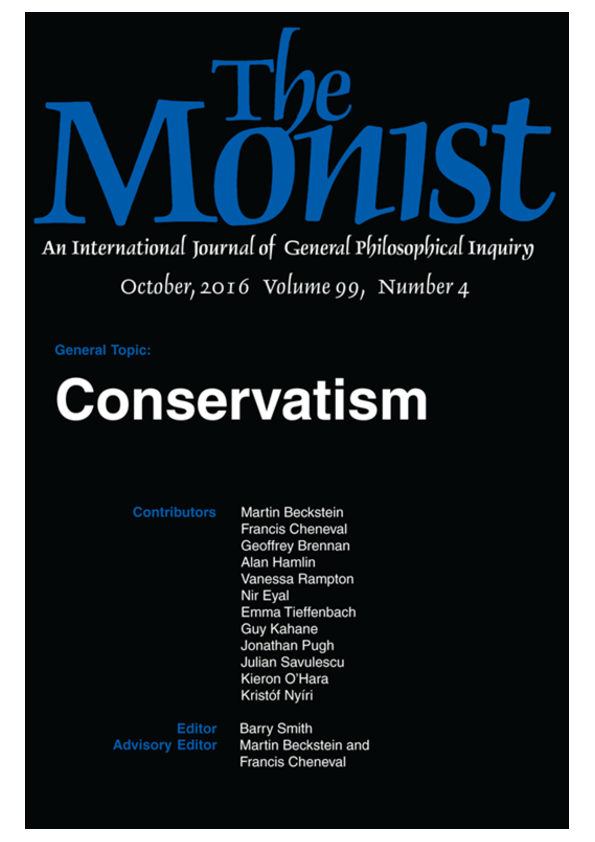
The Monist Vol. 99, Issue 4
Edited by Martin Beckstein and Francis Cheneval
Contributors: Martin Beckstein, Francis Cheneval, Geoffrey Brennan, Alan Hamlin, Vanessa Rampton, Nir Eyal, Emma Tieffenbach, Guy Kahane, Jonathan Pugh, Julian Savulescu, Kieron O’Hara and Kristóf Nyíri
CONTENTS
Conservatism: Analytically Reconsidered
Martin Beckstein and Francis Cheneval
Practical Conservatism
Geoffrey Brennan and Alan Hamlin
Conservative Value
Geoffrey Brennan and Alan Hamlin
The Impossibility of Conservatism? Insights from Russian History
Vanessa Rampton
Incommensurability and Trade
Nir Eyal and Emma Tieffenbach
Bioconservatism, Partiality, and the Human-Nature Objection to Enhancement
Jonathan Pugh, Guy Kahane and Julian Savulescu
Conservatism, Epistemology, and Value
Kieron O’Hara
Conservatism and Common-Sense Realism
Kristóf Nyíri
 MARTIN BECKSTEIN